Book Review: The Secret Life of Lobsters
Go ahead, ask me about lobster sex. I know far more about lobster love than I ever really wanted or would need to know thanks to Trevor Corson’s book The Secret Life of Lobsters. I read Corson’s book for J669 and I have to say, it was a struggle to get through even though I did find a lot of elements in the book compelling.
Corson interweaves lobster research in with the lobster fishing industry of Maine to drive the book forward. The personal stories of the lobster men and their families add a lot of interest to the book. But, toward the end I really found myself struggling to finish the last few chapters because the research was so boring.

Source: Wikimedia Commons.
I really pushed myself to get through all of the pages of description detailing the fluctuations in the lobster population and how lobsters migrate and where lobsters live during certain parts of their life. The hardest part about those chapters was that Corson never arrived at any conclusions. The researchers he wrote about work really hard to pinpoint why the lobster population fluctuates, and after all those pages they don’t reach a conclusion. Ending with the idea that populations naturally vary was so anti-climactic. I was disappointed.The first few chapters about scientific research focus on how a lobster molts (sheds it shell so it can grow) which I found really interesting, and about how lobsters mate. Is it stereotypical that I was entertained by the chapters about lobster sex, but once the book started focusing on lobster habitat and the lobster’s life cycle I found myself hopelessly bored?
Actually, the book officially ends with a discourse on whether or not it is humane to boil lobsters live, which I find sort of perfect. But the rather piddly end to the scientific research was still a let down.
Trouble in MarieClaire’s Blogosphere
Now, I’m not a fashion or lifestyle writer but I think the controversy over MarieClaire blogger Maura Kelly’s post “Should ‘Fatties’ Get A Room (Even On TV)” is worth mentioning. Kelly is a professional blogger, her career is posting her opinions on the internet. But, by coming out with the opinion that fat people shouldn’t be shown in intimate scenes on TV because it grosses her out, she has caused a firestorm. The controversy has raised a lot of questions about professionalism in the blogging community.
I suggest you read her article, and then review the comments posted below it by readers. As a blogger it is all well and good to share your opinions, but where do you draw the line? Kelly is a representative of MarieClaire – not just of herself. By branding MarieClaire with her opinion she has apparently cost them a tremendous amount of business (if you believe the comment writers, at least). What standards do magazines and other companies use to hire bloggers? Are there any standards?
In the apology that she added to the original article, Kelly brings up that she suffers from anorexia and has had a life-long obsession with being thin. Hmm. That might have something to do with why she finds it unacceptable for overweight people to get romantic. Crazy thought, that MAYBE her personal background should constitute a conflict of interest and she should never have be allowed to blog about weight issues in the first place. As a writer, it was her responsibility to identify that conflict of interest.
Even if you feel you can be objective, you just can’t write about issues with which you have a personal connection without disclosing that information properly. I can’t write about issues involving law enforcement because so many members of my family are involved in that career field — it is the reason I will always get tossed off jury duty. It gives me bias. As a writer you have to know yourself, and be honest with your readers about your personal conflicts of interest when they are applicable to the subject you are writing about.
But is a blogger really a professional writer? I am very interested in Ms. Kelly’s background. Does she have a journalism degree? Does she do any research, or does she just spit out her own opinions? Why should anyone care what she says? Who is Maura Kelly? What makes her qualified to eschew her thoughts on an issue like popular conception of body image in the entertainment industry?
I wish someone would pay me to say whatever thoughts cross my mind. Maybe they’ll be an open position for blogger at MarieClaire sometime soon? I wonder if they need a science writer…
Book Review: The Immortal Life of Henrietta Lacks
Today I met Rebecca Skloot, the author of The Immortal Life of Henrietta Lacks, mentioned in my previous blog post. Skloot’s book is the UW Madison Go Big Read program’s selection for this year, so she gave a public lecture last night, and visited the journalism school this morning to take questions.
As far as author presentations go, I loved this one, because Skloot pretty much just plopped down in a chair and said what do you want to know? It was a small group (25-30 people) but the discussion kept up for over an hour just based on audience questions. My question for her was whether she was prepared for the Lacks family’s lack of science education and how she viewed her role as a journalist but also as their teacher. Her response was that the two roles were essentially one because her reporting style is based around an informal conversation, but that she wasn’t really prepared for how confused they were about what HeLa is.
 Other questions that were asked ran the gamut from the business of publishing a book, to how Skloot handled Deborah’s death and incorporated it into the book, how she decided on the structure of the book, and how she handled (and organized) 10 years worth of notes. She was an engaging speaker, and was even willing to talk about some of the criticisms of her that have come up since the book came out.
The biggest criticism of Skloot out there is that she isn’t doing enough to help the Lacks family. But, she has set up a foundation for them — and I think its important to remember that for 10 years Skloot was accumulating debt chasing down this story, if the book hadn’t been a success she’d definitely be in the hole so I agree with her unapologetic attitude toward the money she’s made from the book’s success.
She also mentioned that she sometimes gets push back from people who don’t agree with the fact that she kept all of the interviews in their original dialect (people saying it puts down the lesser educated black people who don’t speak with proper grammar) but Skloot points out that she kept the dialect and “broken” English of European and Asian researchers as well as the Lacks family.
According to Skloot the biggest problem she’s encountered so far has been from the white members of the Lacks family. In the whole two pages that the white Lackses are discussed, they definitely appear as racists. But, it is Skloot’s word against the word of the children of her sources (her sources are now dead) who have argued that Skloot couldn’t possibly have done the interviews because their parents wouldn’t have said the things Skloot says they did.
Considering how utterly unimportant the white Lacks family is to the story, it’s sort of absurd to think that Skloot didn’t really do the reporting. It would be such a dumb part of the story to make up, so I’m inclined to believe that the interviews are true.
This book is undoubtedly going to be Skloot’s literary legacy, so overall it was fun to get another first hand perspective on what it takes to research, write, and market a successful science book.
Cell Culture’s Dirty Little Secret
My last assignment for BioTechniques web news was a cell culture themed newsletter article on the status of cell line contamination. It was while researching that article (Ending cell line contamination by cutting off researchers) that I got my first real education about HeLa cells. I recently added to that education by reading Rebecca Skloot’s The Immortal Life of Henrietta Lacks for J669.
I already had a firm grasp on the science of cell culture and contamination of cell lines, but the book gave me a lot of background about Henrietta Lacks, the woman the HeLa cell line was harvested from (and thus named after). Cell line contamination is the dirty little secret of the biological research community, and the story of the Lacks family certainly doesn’t make the research community look any better.
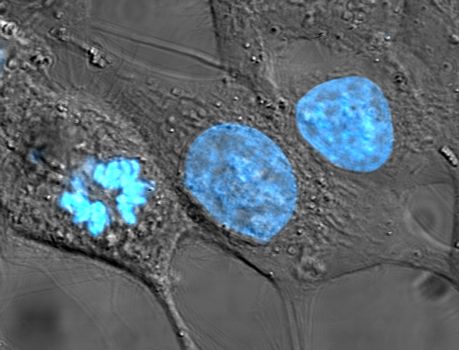 |
| HeLa Cells. Source: Wikimedia Commons. |
One thing that I like about Skloot’s book is that she doesn’t look at either the family or the researchers involved in the HeLa controversy with rose colored glasses. I think the book is fair because it drives home the point that the researchers involved in cell culture in the 1950’s all followed protocol at the time. There isn’t a single person to blame for the fact that Henrietta Lacks’ cells were cultured without her consent or that no one ever bothered to educate her family about cells, what it means to grow them in culture, and the research that cell culture enables.
It wasn’t standard practice back then to tell research subjects much of anything. Not that I think what happened to the Lacks family is ok, I believe in informed consent – even if that means giving someone the basic science education they need to understand what will happen to their tissues once they give them up to science. But, hopefully publicizing more stories like the Lacks family’s will help people speak up and learn more about biological research.
I found Skloot’s book compelling, but my biggest problem with it was the ending. To me, it just ends abruptly. The death of Lack’s daughter Deborah (who is a major character in the book through her interactions with Skloot) gives the book an ending of sorts, but something is still missing. I wish that there was something that could tie the book together like a change in policy or new regulations put in place, but sadly no such changes have occurred.
Cell line contamination is a rampant problem in the biological research community, and currently in the United States there are no regulations that force researchers to verify the origin of their cells lines or identify the contaminants they may have been exposed to. Cell line contamination pisses me off. We spend billions of tax dollars on research — that may end up completely worthless because researchers have no incentive to check and make sure that the cells they are working with are what they think they are. What good is research for treatments for blindness when you aren’t working with corneal cells, you are actually working with cervical cancer cells?
If you want to learn more about cell line contamination, a search in PubMed (a database of academic research papers) for Roland Nardone will yield several academic papers on the issue, but I suggest reading “Recommendation of short tandem repeat profiling for authenticating human cell lines, stem cells, and tissues,” because it actually offers a solution to the problem of how to authenticate cells.
Water on the Moon
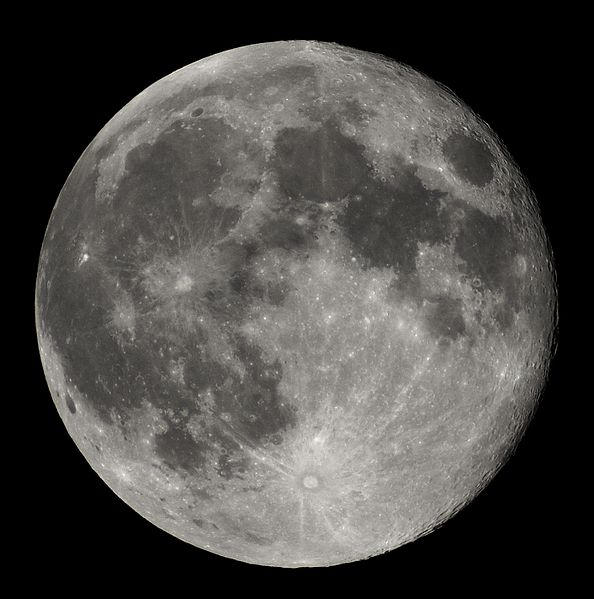 |
| Source: Wikimedia Commons. |
Since I was a little kid, I’ve loved space. The whole idea that there are other worlds surrounding us has always fascinated me. But, alas I am not so good with chemistry, physics, and math so studying space was never really within my academic dreams. I still got to daydream though, and who doesn’t love imaging what it would be like to live in space?
Well, NASA scientists are one step closer to colonizing the Moon, according to research reported earlier this month. Researchers performed experiments that used rockets to collide with lunar craters to loosen rocks and dust that could be evaluated for their chemical compounds, and found a significant amount of water in the craters.
Access to water would be necessary to sustain a colony anywhere, so the discovery that there might be water resources on the moon that could be used by people is a step in the right direction toward people branching out and living on the moon.
The BBC article by Johnathan Amos: Moon’s water is useful resource, says NASA
Commercialized Space Flight
 |
| NASA Space Shuttle Atlantis. Source: Wikimedia Commons |
People have been taking about commercializing space flight for years, but according to the BBC article “Runway opens at worlds first spaceport” Sir Richard Branson (the Virgin group) is going to make it a reality within the next few weeks.
Of course you don’t get to spend any real time in space, they are marketing a three hour journey where you get launched into space and then come back. If you have the money though it would be pretty cool to be able to say that you’ve been to space. At least 300 people at $200,000 each think so, and have already signed up for the flight.
Blending In
The BBC is reporting new research on why certain species of wild cat have the color patterns in the fur of their coat that they do. Its long been claimed that the patterns (spots, stripes, etc.) help the animals blend into their surroundings, but the new study goes into more specific detail about how these new patterns actually help the cats blend in.
The research was published in Royal Society Journal, and conducted by a team from the University of Bristol. The BBC article by Katia Moskvitch is, “On how the leopard got its spots.”
Bait and Vaccinate
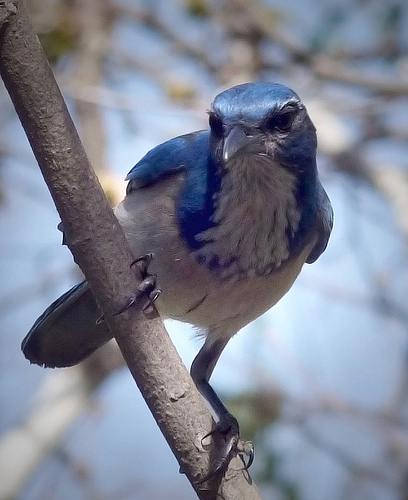 |
| Island Scrub Jay. Source: Flickr |
Researchers are working to save the island scrub jay, a bird native to Santa Cruz Island (part of California). By luring the birds with peanuts, and then trapping them under a wire basket the researchers are able to vaccinate the birds against the West Nile Virus. The virus has been deemed a serious threat to the birds, because they all live on a single island so an outbreak would spread quickly.
The LA Times article: Taking a rare jay under their wing, tries to get an interesting hook in by describing the simple way (like a Wile E. Coyote prank) the researchers are undertaking such a complex conservation effort. I think it draws you in enough, although the article is a little long, and I did find myself skimming toward the end. I was able to skim it though- which means that the writer did a good job of explaining the science in a clear way.
Sleepy Skyping
This morning I got up at what I consider an un-godly hour (6am) to call a researcher in Wales for my last article for J800, before going to class. Business hours in the UK run from the very early hours of the morning here until around noon, which left before class as the best time to do the interview.
I wanted to just use Skype to call his landline, but when he found out I was using Skype, he suggested that we video chat. It is a good thing that I decided to get ready for class and got dressed before I contacted the researcher, otherwise he would have seen my pajamas. I do 90% of my interviews by phone, and probably the other 10% by email. I haven’t interviewed someone face to face in over a year. So compounded by the fact that it was really early, I was caught off guard with the fact that he could see me, and that I was talking about some really complex genetics – I am fairly certain I sounded like a babbling moron.
I think I got a few good quotes though, so at least it was worth it, though the more I write them, the more I dislike feature-length issues pieces. They are unruly to say the least, but I hope I am becoming better at wrangling information.
Rare Variants
My article from the October issue of BioTechniques is out! I reported this one back in August right as I was moving to Madison. It is exciting to finally be able to see it in print. It is also available online, which means you should be reading it right now.
Many thanks to the scientists who spent so much time talking to me about rare variants, and to the editorial staff at BioTechniques for editing, and editing, and editing some more.
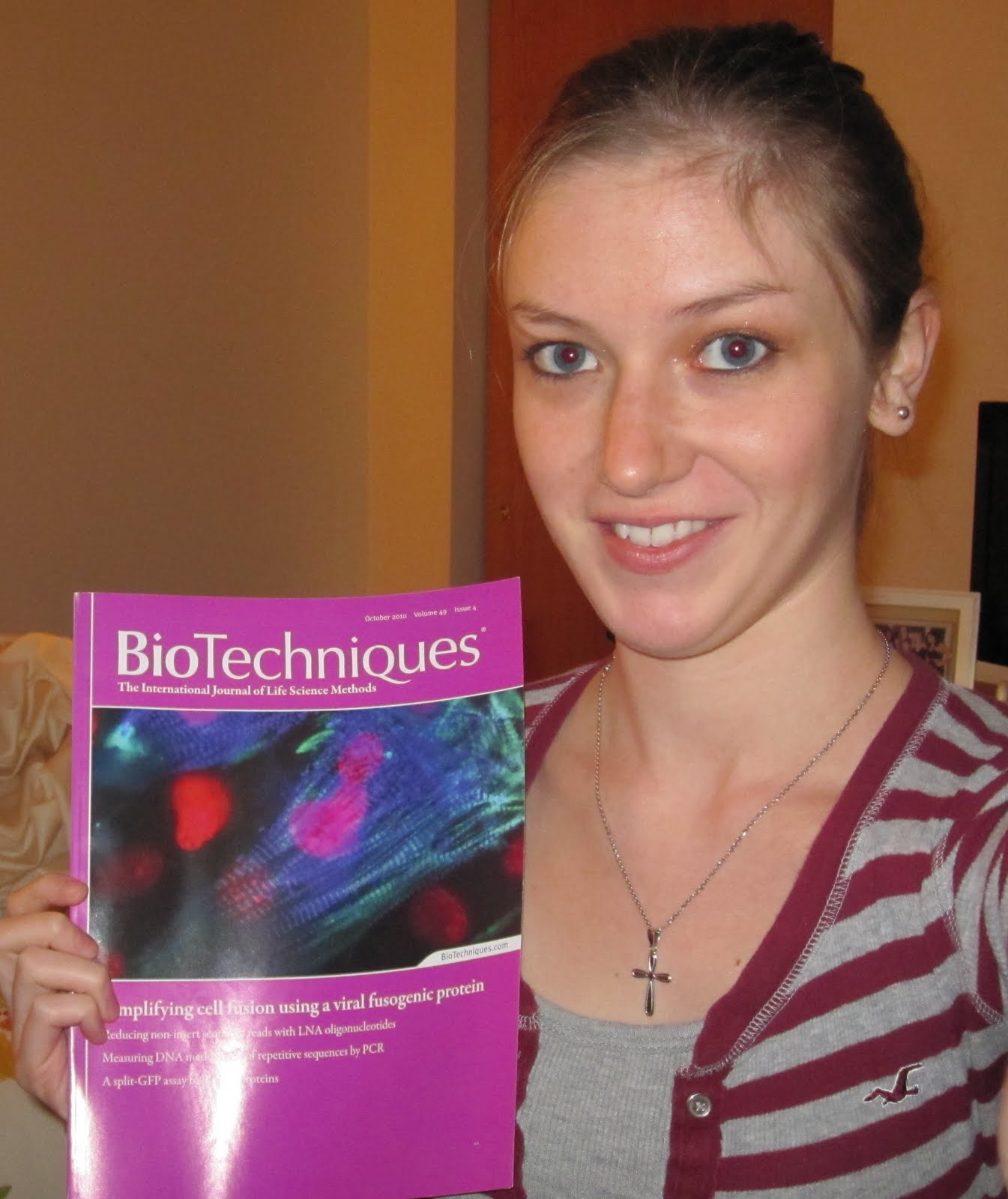 |
| Posing with the October issue! |
Before you dive into the article, I’m sure you are asking yourself what is a rare variant, and why do I care? Well – rare variants are specific mutations in the genome that only happen in a few individuals, in some cases even just a single person. These variants are important because any time that something is amiss in your genome, it has an effect on you. At times these effects include causing disease. So, studying rare variants can tell doctors important things about disease and possibly help come up with new treatments. But, studying these rare variants is extremely difficult. To learn why, read the article!