Giraffe at the Henry Vilas Zoo Madison, WI August 2010. Credit: Erin Podolak
Now I know special interest stories are important, getting the personal angle that appeals to the audience’s emotional side is a great way to sell as story, but now the BBC is writing about giraffe love? I think everyone will sleep easier tonight knowing the Gerald the Giraffe has a new girlfriend. To think people are worried about the future of journalism. Bachelor giraffe in bristol finally gets a girlfriend.
I was greatly amused by the article “Moonlighting As A Conjurer of Chemicals” by Natalie Angier for the New York Times. It is about Sir Isaac Newton and how in addition to giving us the laws of gravity and inventing calculus among other solid scientific findings, he was also very interested in alchemy.
Yup, alchemy – turning lead into gold? I liked the article because Angier did a good job of describing why someone of Newton’s genius would believe that alchemy is real. I also love science history, so overall that probably explains why I found this fascinating. I also love the title.
I also find this greatly amusing, and I was reminded of it by reading about Isaac Newton:
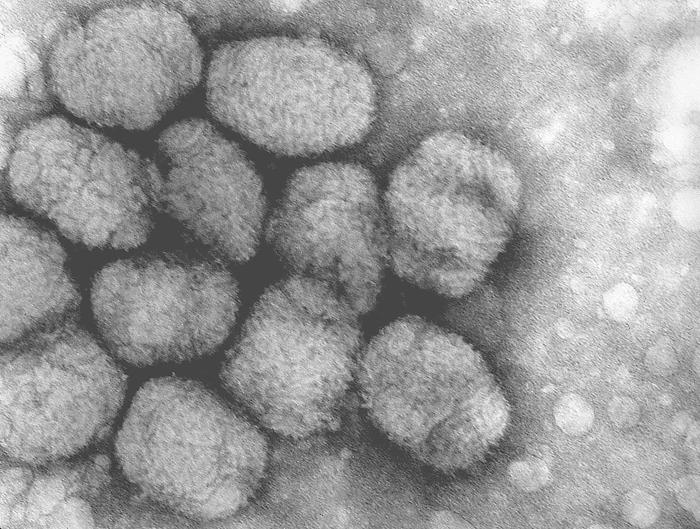
Scientists are reporting that the rinderpest virus has been wiped out. This marks the second virus to be eradicated by humans, the first was smallpox. Although, its not really eradicated because scientists, governments, and god knows who else have samples of small pox, and I’m sure will keep samples of rinderpest too. The BBC Article: Rinderpest virus has been wiped out, scientists say.
According to the BBC article, rinderpest killed cattle in Africa, Asia, the Middle East and Europe. Most notably in the mid 19th Century it caused the death of 80%-90% of African cattle and buffalo. Fun fact that I learned from this story: there are buffalo in Africa. Who knew?
I’ve been thinking a lot lately about why I chose to specialize in science. Whenever people ask, I typically tell them it is because I was really awful at science itself. This is only a half truth. I was absolutely awful at Chemistry and Physics, but I have always loved and succeeded in Biology and Environmental Science. I know my difficulty in chem and physics was directly tied to the trouble I have with math.
I know math has been described as beautiful for the ways in which numbers work through a charted path to arrive at a solution. But I have never been able to follow that path. I always get hopelessly muddled in trying to understand the principles to the point that I can’t follow the equation or the rule or whatever I’m supposed to be applying. I’m not stupid, so I wonder sometimes why I was so terrible at math. If I had a single teacher that cared enough to go off script and try to explain things in a different way, would I actually have been able to excel at a subject that didn’t come naturally? Things I”ll never know I guess.
But anyway, consequently when I arrived at Lehigh I wanted to be a biology major, but I was so behind in math (barely scraping through Algebra III was a far cry from passing Calc I & II) that I would have had to pass pre-calc for no credit before I could even start on my major track. I wonder if in choosing to write about biology instead of struggle through the math that I needed to be able to do biology if I took the easy way out. Although, I’m not sure there is anything easy about being a science writer.
I bring up my specialty and why I chose it because today in J800 Adam Lashinsky, a feature writer for Forbes, spoke about his work as a finance writer. He said he was working hard to avoid getting labeled as a tech writer, although he has done a lot of reporting on business in the Silicon Valley. His reasoning was that he wanted to be free to write about whatever interested him.
There are positives and negatives to specializing, but for me it was the whole reason I got into journalism in the first place. I wanted to be connected to the science, so for me without that bond with my speciality I can’t say that I would be in journalism at all. I wonder if that will make me a better or worse science writer?
Today in J620 we watched the documentary Seeing Is Believing: Handicams, Human Rights, and the News by Directors Kateria Cizek and Peter Wintonick. The film is a little old, and because it is about technology it is thus a little outdated, but some of the general principles are still pretty interesting.
Video has tremendous power in terms of reporting human rights issues, both for good and for ill. In the film journalist Joey Lozano follows the Nakamata, a group in the Philippines that are given a video camera by the human rights group Witness, to help document their struggle to reclaim their ancestral lands from sugar cane producers. Lozano serves as a go between for the native people and the media, teaching them how to use their camera and helping them take their footage to the mainstream media in the Philippines to get attention for their cause.
This would be the good side of the power of video, it helped the Nakamata document violence that was being perpetrated against them, and helped to ward off violence once it was well known that they had a camera available. On the flip side, the film also showed that violent extremist groups also have access to video and use it to recruit new members and spread their own messages. The film specifically showed videos made by the Taliban and Neo-Nazi groups.
It was an interesting film, but at the same time I don’t think its exactly a revolutionary idea that video is a powerful communication medium. Since the film was made, I think that film has just increased in power for the good and the bad groups around the world. In doing my own research on the film, I also learned that Lozano died in 2005 of cancer. Its sad in its own right, but in the context that a disease took down a man that survived an assassination attempt, I find his story particularly moving.
This past weekend I spent all day Saturday reading Zeitoun, by Dave Eggers. I thought it was a great example of literary journalism, and also personally thought provoking. The book tells the story of one family in the days before, during, and after hurricane Katrina hit New Orleans in 2005. In addition to your typical survival story, it is also about being a Muslim in a post-September 11th America.
My only first hand contact with Hurricane Katrina was through the students from Tulane who were displaced and so spent the Fall 2005 semester at Lehigh. College all over the country took in the Tulane students until the campus could reopen. Other than that, I don’t know anyone who lives in that part of the country. Of course I followed the media coverage, but there is nothing like hearing someone tell their own story of what they went through. Eggers’ reporting of the Zeitoun family’s story was like hearing them tell it to me themselves. I felt like I was right there with them and it was more moving than a lot of the reporting that I was exposed to in the days after the hurricane struck.
As a Muslim family they had to also deal with the fear or being attacked for their faith, and ultimately Abdul (the father/husband) was suspected of terrorism in a lawless New Orleans, when there was no real evidence against him and arrested by the makeshift police forces in place. As someone deeply and permanently affected by September 11th, it was hard at first after that attack to distinguish between subsets of faith, to try to figure out who had struck out against my family. But ultimately by educating myself I’ve come to the conclusion that Islam is a peaceful religion, which believe me has been a hard sell to some of my friends and family.
I feel conflicted sometimes because I don’t believe people should be persecuted for their religion, the United States is grounded in religious freedom, but at the same time we need a way to protect ourselves from people who believe their religion entitles them to hurt anyone who isn’t of their faith. I’m not sure what the answer is, but arresting Muslims based on no evidence certainly isn’t it. The Zeitoun’s story made me angry because with all the resources this country has it its disposal, lawlessness should never be a concern, even in a decimated city. How does a country like the United States lose total control like that?
I don’t particularly have any answers to the issue of how to maintain religious freedom in the face of Terrorism, I am after all a mere journalism grad student, but you should read Zeitoun because it is important to at least think about these issues. You need to be exposed to other people and their stories and perspectives to understand the implications of public policy.
I hope that I don’t have as much ego as this comic would suggest. I also don’t have to write a thesis so lucky me, but I do agree with the free food. There should also be a spot dedicated to coffee… just saying.
“Piled Higher and Deeper” by Jorge Cham, www.phdcomics.com
Researchers from the University of Minnesota have released a study showing that genetically modified (GM) corn crops have a notable economic benefit for farmers. GM corn is designed to kill the european corn borer, a bug that eats the corn plants. By killing the insect, the GM plants actually help non-modified corn crops. The combined affect on both types of corn adds up to a decrease in losses for farmer’s whether they plant the more expensive GM seeds or not.
The study is the first documented evidence that genetically modified crops can help farmer’s make money, even though initially they are more expensive to plant. It is a good indication that a mixture of GM and regular crops are likely to be pursed in the US.
The New York Times also recently ran an interesting article (After Growth, Fortunes Turn for Monsanto) about a down turn in profits for Monsanto, the most well known of the GM companies. Monsanto has been losing money on their newest type of GM corn, in addition to other products because farmer’s just aren’t buying them as the company had predicted.
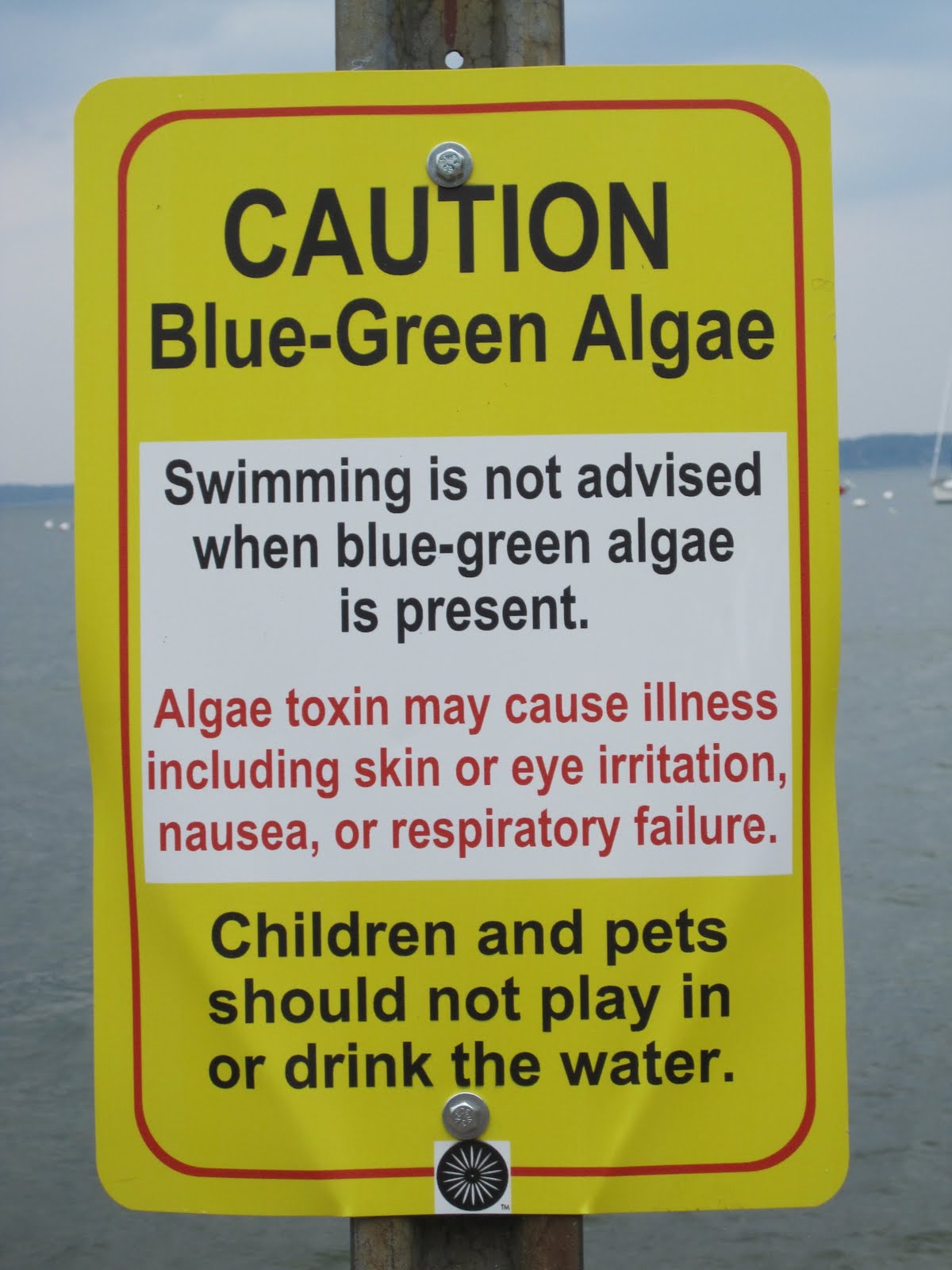
There is an article in the BBC this week about algae that have toxic affects on coral reefs. This article stood out to me because I just finished working on an article about toxic cyanobacteria (which come from algae) in lakes in Wisconsin for J800.
Most of us know what algae looks like, it is the green slime you see floating in natural bodies of water or growing on rocks, docks, or other items that stay in the water continuously. Algae occur naturally and aren’t typically a problem. However, for the last decade researchers have been evaluating toxic algae, that is algae that blooms in a large concentration due to an increase of fertilizer in the water.
Where does the fertilizer in the water come from? Well the easy answer is agriculture. The fertilizers used by farmers get washed away and flow through the system of rivers and tributaries to larger bodies of water. The algae feed off the fertilizer and then “explode” in a huge bloom that can have toxic affects.
In the case of the coral, the algae are using up nutrients like oxygen and sunlight so that the coral are denied access to these resources and die off. What can be done? Well, find a way to allow farmer’s to fertilize their crops that won’t end up in our waterways causing algae blooms. But that is far easier said than done.
I haven’t blogged about any actual science in awhile, so I give you the curious case of the dying honeybee. Since 2006, scientists have been trying to figure out what could be causing “colony collapse” where whole hives of honeybees die off. In the last four years, approximately 20-40% of the hives in the United States have died (that is a remarkably large amount).
Researchers have been struggling to figure out exactly what is killing the honeybees, an essential part of many ecosystems due to their role as pollinators. It took four years, but a joint team from the United States Army and the University of Montana are reporting that the culprit in the honeybee killing spree is an co-attack by a virus and a fungus. The researchers believe that the virus and the fungus may be interacting to disturb the absorption of nutrients, although the exact ways in which the bee’s internal systems are thrown off is not yet known.
This is interesting for two reasons: 1. A virus and a fungus interacting to kill a species is rare 2. The United States Army teaming up with Academia isn’t rare itself, but most partnerships occur to speed things up or keep costs down. This partnership was to really figure out what was causing the bees to die which is unusual.


 My only first hand contact with Hurricane Katrina was through the students from Tulane who were displaced and so spent the Fall 2005 semester at Lehigh. College all over the country took in the Tulane students until the campus could reopen. Other than that, I don’t know anyone who lives in that part of the country. Of course I followed the media coverage, but there is nothing like hearing someone tell their own story of what they went through. Eggers’ reporting of the Zeitoun family’s story was like hearing them tell it to me themselves. I felt like I was right there with them and it was more moving than a lot of the reporting that I was exposed to in the days after the hurricane struck.