First Day Of School
Yesterday was the first day of classes for the spring semester. As much as I struggled to come back to Wisconsin this semester I know that it will be a busy and productive few months. My first class was my science elective, the Biology and Psychology of Human and Animal Relationships.
 |
| A border collie like Willie. Source: Wikimedia Commons |
I was a little concerned signing up for a zoology course, considering the majority of my science background is in environmental science (with a little biology on the side.) But, I think this class will be incredibly interesting, and judging by the readings the material won’t be anything that I can’t handle.
My professor Patricia McConnell brought her dog Willie to class for the first day. He served as an example of the emotions that some humans feel toward animals, and started a discussion about why we feel more connected to animals like dogs than we do to say a chicken. Willie is a border collie and a trained sheep herding dog, so he was well behaved enough to be allowed to wander the huge lecture hall walking up and down the rows to be petted.
It is just the beginning of the semester, but already I’ve got the ball rolling on several projects. I’m still doing background for my first Primate Center assignment, but I’ve got my first interview for that scheduled for next week. I’ve got a freelance project that I’m working on that is more health/medical writing so that is also something that is taking up my time. Being so busy is helping with my homesickness.
Shark Vision: It’s a Black and White World
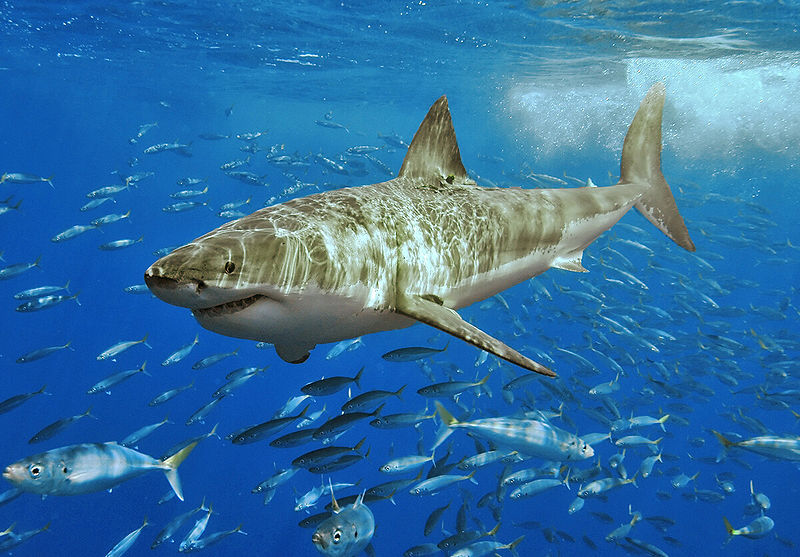 |
| A great white shark. Source: Wikimedia Commons. |
Interesting research out of Australia analyzed the cell types in the eyes of 17 species of sharks, and found the the predators are largely color blind. The find is significant because it could help developers create new fishing industry equipment and water activity gear to reduce shark attacks based on visibility.
The researchers, from the University of Western Australia and the University of Queensland, looked for different types of cone cells in shark eyes. Humans have three different types of cones that enable us to receive and process blue, green, or red light waves. Sharks have only one cone, meaning they do not have the ability to distinguish between colors.
Just to Clarify: The Blackbird Incident
There was a great article in the New York Times about the confusion that took place between the media, scientists, the government, and the public regarding the New Year’s Eve bird deaths in Arkansas. Conspiracies Don’t Kill Birds, People Kill Birds by Leslie Kaufman does a great job of explaining how the bird story got blown out of proportion.
 Basically, birds die all the time. It’s not all that unusual for flocks of birds to die, according to the article’s statistics (from the National Audubon Society) approximately five billion birds die in the US every year. Rural cats kill 39 million birds a year. So basically, the whole incident wasn’t a conspiracy or a case of poison run amok. Birds die, thats kind of all there is to it.
Flying objects can interrupt birds’ flight and send them careening into buildings and billboards. So while I was pretty skeptical of the fireworks explanation on the basis that if fireworks cause bird deaths we would have heard about it before this, it is possible that was what happened in Arkansas. That would mean that all the subsequent bird death articles in the media could very well be a case of the media being bored and picking up on a story that really wasn’t a story because it happens all the time.
What’s In A Name?
I found an interesting little article (New Dehli superbug named unfairly says Lancet editor) in the BBC about naming bacteria, and whether or not it is fair to name a bacteria after a place.
 |
| Map of India. Source: Wikimedia Commons. |
The bacteria in question is called New Delhi metallo-beta lactamase 1 (NDM-1) and was discovered by researchers from Cardiff University in the UK. According to the BBC’s article the researchers named the bug after the city because the patient whom they first noticed it in, had been in a hospital in Delhi.
The Lancet, the journal that published the article about the bacterium has made a statement saying that the name of the bug is unfair because it stigmatizes India. The bug has since been found in Europe, the US, Canada, Australia, Africa, and East Asia.
While I get why India might be pissed off (no one wants bad things named after them) I think you really have to analyze the impact that the name will have. Honestly, the bug is going to be known as NDM-1. Very few people would use the term ‘New Delhi metallo-beta lactamase 1’ in conversation. Of the people that will use and know the real name of the bug, it will not be the tourists interested in coming to India. Therefore I find the argument that the name will harm India’s tourism industry kind of overblown.
I also find it interesting that the Lancet essentially threw the Cardiff University researchers under the proverbial bus. Again, I understand that the journal has to protect itself and its reputation, but if the researchers stand by the name I don’t think its the journal’s job to denounce it. If nothing in the research is wrong factually, I don’t think the journal should issue a public statement saying that the researchers showed poor judgement. It makes me wonder who was putting pressure on the journal to make a statement.
The Plant That Took Over America
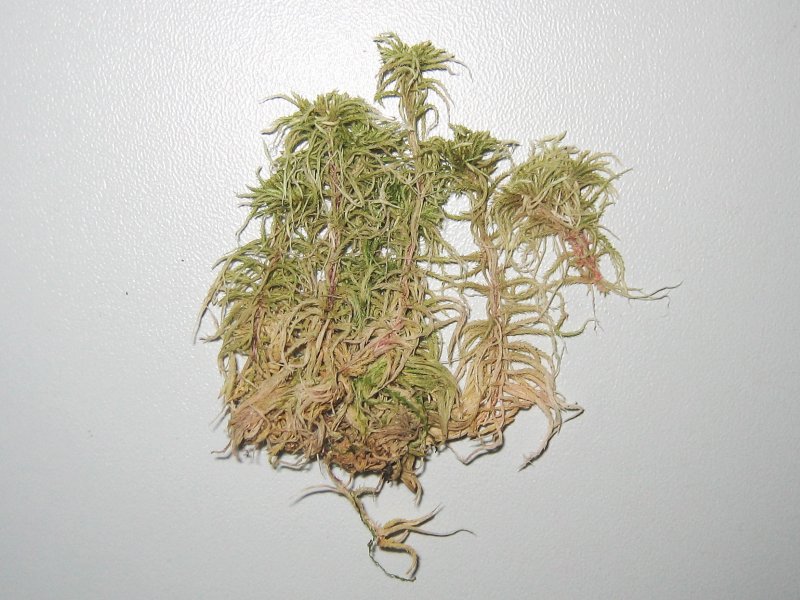 |
| Sphagnum subnitens. Source: Wikimedia Commons. |
It grows, it spreads, it takes over North America… its peat moss. Now I know that peat moss isn’t exactly the most exciting of topics, but the article Single peat moss plant ‘conquered America’ stood out to me for a few reasons.
I have written a lot about genome sequencing and genetics, and this research sequenced the genome of the peat moss Sphagnum subnitens, and found that all the samples they collected were genetically identical. This means that there is a common ancestor for the peat moss that spread prolifically throughout North America.
The research was conducted by teams from Ramapo College in New Jersey (another reason why this article caught my attention,) Binghamton University in New York, and Duke University in North Carolina. The different types of peat moss vary in color and are found in distinct locations, which makes the 100% genetic match all the more amazing.
The moss species reproduces sexually, but a single plant can make both the necessary sperm and eggs so its offspring are genetically identical, without being asexually reproduced clones.
Animal Tagging Ethics
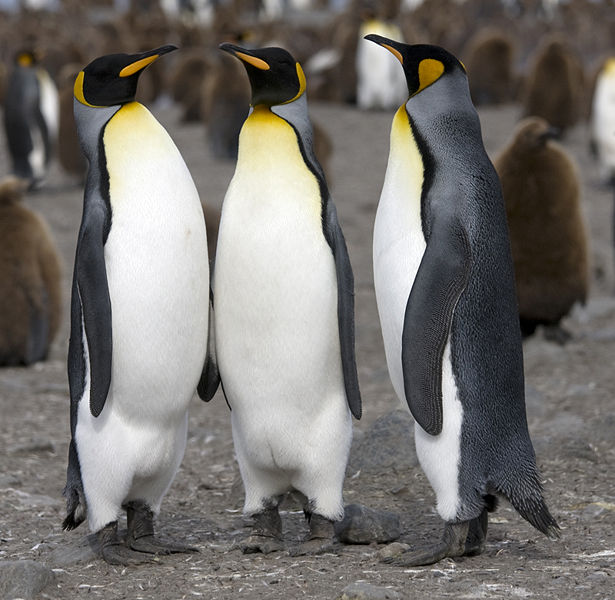 |
| King Penguins. Source: Wikimedia Commons. |
New research published in the journal Nature says that the most popular way for tagging penguins for scientific analysis – putting a band around a flipper – may be detrimental to the penguins’ reproduction and survival. This brings up the ethical issue of whether or not the practice of tagging with a band should be continued.
Researchers from the University of Strasbourg and the French Centre National de la Recherche Scientifique (CNRS) wanted to clear up debate about whether or not the tags, which have been in use for over a decade, have an effect on the penguins detrimental or otherwise.
The study, in king penguins, showed that penguins tagged with the bands had 40% fewer chicks than un-banded penguins. Banded penguins also lived shorter lives. The finding is likely to be controversial because it draws into question the validity of past research done using the bands.
The research also has ties to climate change because many penguin species are already threatened due to changes in their environment. In addition to the typical ethics of whether or not its right to do something that could be harmful in any way, tagging with the bands could also be seen as unethical for stressing an already challenged populations.
Universal Flu Vaccine
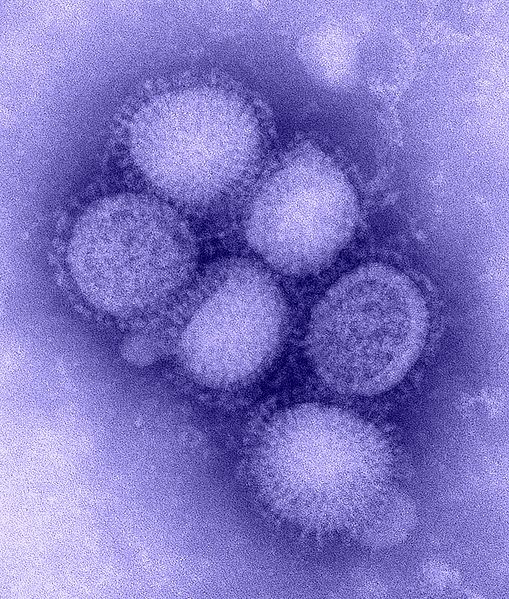 |
| H1N1 Virus. Source: Wikimedia Commons. |
A new study in the Journal of Experimental Medicine reports that people who fight off the swine flu (H1N1) develop antibodies that can help them fight off other flu infections as well. This finding could be used to create a universal flu vaccine that would eliminate the need for a yearly flu shot against that year’s most likely problematic strains.
Five antibodies isolated from patients that had successfully fended off swine flu appeared different than those antibodies created to fight more typical flu strains. Those antibodies have proven able to fight off even virulent flu strains like the “spanish flu” from 1918 and bird flu (H5N1).
The important thing to remember with a breakthrough like this is that even thought the results are promising, it takes a long time to get from the basic research stage to human trails and widespread availability as a treatment. So even if this works, don’t expect a universal vaccine anytime soon. It is likely to be five years or more before doctors can even think about saying goodbye to yearly flu shots.
Book Review: Poisoner’s Handbook
My holiday break is starting to wind down (as evidenced by the Christmas tree that has made its way out to the front lawn to await collection) but thing are just as busy as ever. I spent a large chunk of today applying to internships for the summer, and pitching one of my articles from last semester. We’ll see if I get responses, but for now I feel productive having at least sent out so many emails.
After such a productive morning I treated myself to an afternoon of reading and was able to finish my advisor Deb Blum’s latest book Poisoner’s Handbook. I said back in the fall that I wanted to read her book, and I was lucky enough to win a signed copy at the end of the semester event for UW’s online literary magazine Corkboard (which features the work of some very talented student writers, so you should check it out.)
 Poisoner’s Handbook tells the story of New York City’s first chief medical examiner, Charles Norris and famous toxicologist Alexander Gettler. The book is a work of literary journalism that chronicles the rise of toxicology and forensic medicine in the 1920’s and 1930’s covering prohibition and the great depression. I thought the book was well written, and I’m not just saying that because Blum has say over my grades. She does a great job of making chemistry approachable, and I hate chemistry so that is actually a big compliment.
The book is organized with each chapter representing a different poision, with some paragraphs on Norris, Gettler, and the science of toxicology and some paragraphs describing a murder case showing the effects of each chapter’s poison. If anything I would say that because some of the people described in some of the murder cases reappear in other chapters, it can be hard to remember who is who. But even so, that did’t dampen my enjoyment of the book. The structure was easy to follow, and even in moments where I had to think back to remember a character I was never really lost.
Knowing Deb Blum personally there were points where I could actually hear her in my head reading aloud the words on each page. In our literary journalism class she would read us experts from each of the authors we studied so I’ve gotten used to the cadence of her speech. I found it pretty interesting that I could see the same rhythm in her writing, and it made me wonder if I write the way I talk.
Poisoner’s Handbook is the fifth book I’ve read since coming home, and hopefully I’ll be able to finish one more before heading back next week. I am running out of space on my bookshelves at home, but I still love seeing my little library. It makes me feel oddly accomplished.
Snake Banishment Bias
The New York Times article, Snake Owners See Furry Bias in Invasive Species Proposal caught my eye today because I love snakes. I know that it is a little unusual for a girl to love snakes, typically snakes induce a lot of frightened yelping. But, I have always found them awkwardly beautiful.
 |
| Normal and Albino Snake. Source: Wikimedia Commons |
According to the article the US Fish and Wildlife Service is cracking down on snake ownership due to the increased prevalence of invasive snakes in various ecosystems. Boas, Anacondas, and Pythons are among the types of snakes included in the crack down, but they are popular as pets. Pet snakes become problematic when they escape or get released into the wild and prey on local species.
Opponents to legislation to restrict the sale of snakes say that there should be a distinction between snakes that can’t thrive in the wild (suffering from albinism, or in unsuitable climates) versus snakes that are likely to become invasive.
Snake enthusiasts are opposed to legislation that would restrict the sale of snakes on the grounds that there could be a significant loss of revenue for breeders. Because the animals are pets, restrictions would also bring up the issue of whether the government should be able to dictate what type of pets people keep.
Split in Sudan
A few weeks ago I read Dave Eggers’ What is the What about the civil war in Sudan. When I posted about it, I said that one of the main things that struck me about the book was the complexity of the conflict in that part of Africa – politically, socially, and economically.
I wanted to do a short follow up post, because right now all eyes (or at least those with an interest in foreign affairs) have turned to southern Sudan, where polling is going on to see if the people that live in the south want to form an independent country, breaking Sudan into separate North and South countries.
According to the BBC, there is no doubt that the people of the south will choose independence, but the poll will only have merit if 60% of the regions 3.8 million residents turn out to participate in the poll. Right now the focus is on getting people to the polls in an orderly fashion, and so far there have been no incidents.
One issue to watch as southern Sudan makes its stride toward independence is territory boarders. Sudan does have areas that are rich in oil, that the North doesn’t want to lose to the South. If the South claims areas that the North wants, there could be a fresh outburst of violence in Sudan.
The BBC has a great interactive map that you can check out for more information, or for a visual representation of how the northern and southern regions differ by ethnicity, infant mortality, water and sanitation, education, food insecurity, and the location of oil fields.